
CfxNatives — The Fast, Free Developer Hub for FiveM Natives
Why We Built CfxNatives
Searching for natives can be frustrating — slow loading, broken mobile layouts, constant tab-switching. If you've ever spent more time fighting a reference site than actually writing code, you know the pain. CfxNatives was built to solve exactly this. It's a 100% free, community-driven utility with no ads, no paywalls, and no compromises on speed. Just open it, search, and get back to building.
What Makes CfxNatives Different
Most native references feel like afterthoughts. CfxNatives was designed from the ground up as a real developer tool:
- 7,358 native functions fully indexed and optimized for readability — every parameter, return type, and description is structured for quick scanning
- 167+ real-world framework snippets covering QBCore, ESX, Ox, and Qbox so you can copy working code instead of guessing at implementations
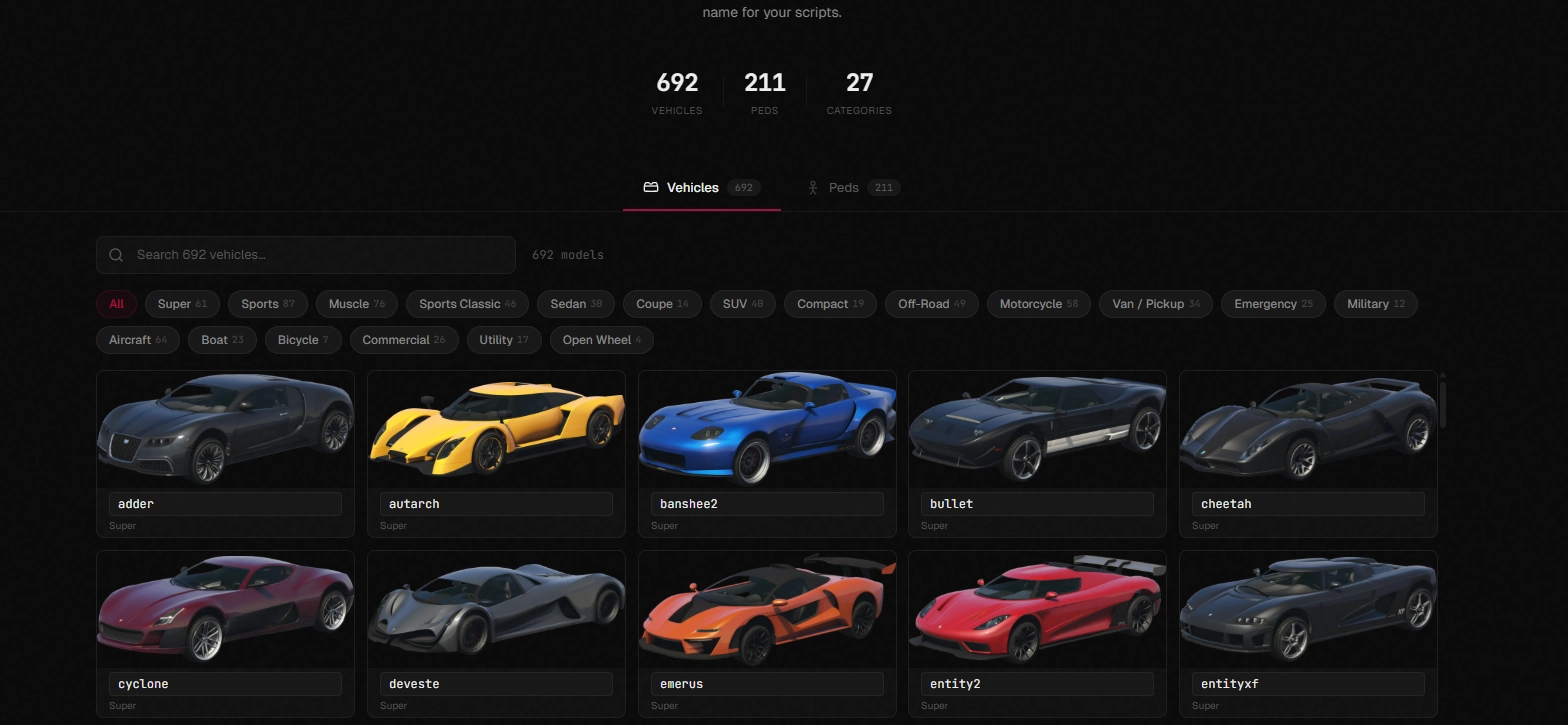
- 900+ vehicle and ped models with high-quality previews and one-click copy on the Models page — no more guessing spawn names
- Entirely statically generated — zero lag, instant page transitions, works great even on slow connections
Built for Your Development Workflow
CfxNatives isn't just a reference — it's a full development companion:
- Global Search (Ctrl+K) to find any function by hash, name, or keyword in milliseconds
- Artifacts Explorer to track server builds with community stability tags so you always know which version to run
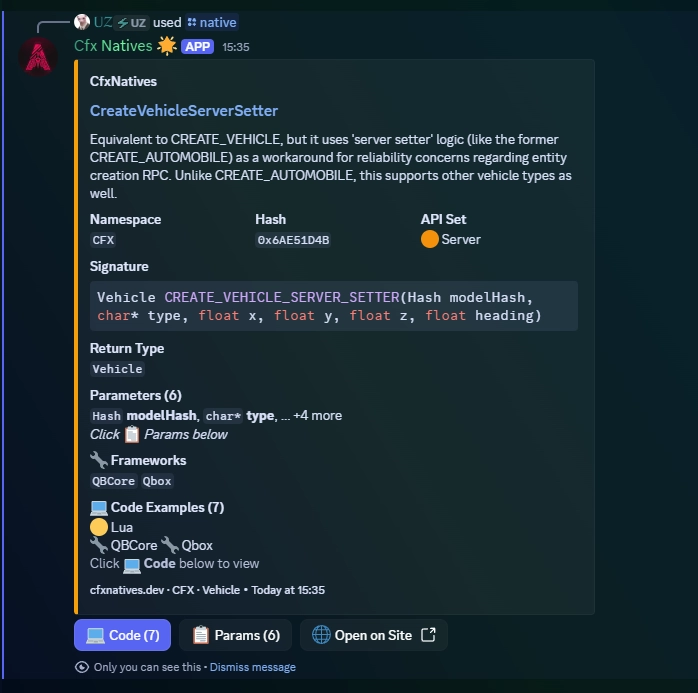
- Discord Bot — use
/helpto pull any native directly into your dev server chat without leaving Discord - Public API — free to use for building your own tools, bots, or integrations on top of the native database
Getting Started with CfxNatives
Getting up and running takes seconds. Head over to CfxNatives.dev and you'll be greeted with a clean overview of all native categories — from player and vehicle functions to UI and streaming APIs. Everything is organized so you can dive straight into the area you need.
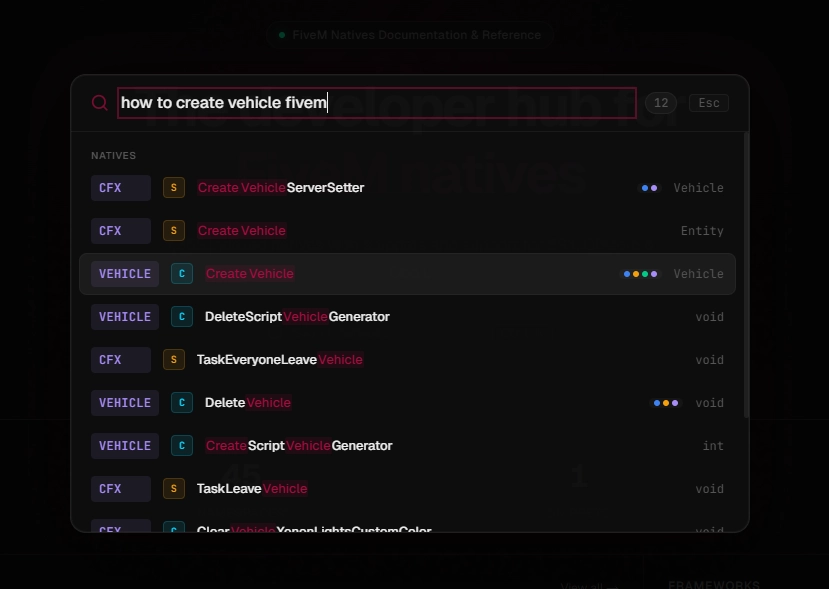
The search bar is where CfxNatives really shines. Type any native name — like GetEntityCoords or SetVehicleColours — and results appear instantly as you type. No waiting for pages to load, no filtering through unrelated results. Each native page presents parameters, return types, and descriptions in a clear, structured layout that's built for scanning, not reading walls of text.
Need real implementation examples? Click the Framework Snippets tab on any native page to see working code for QBCore, ESX, Ox, or Qbox. These aren't generic examples — they're real-world patterns pulled from active development workflows.
The Models page is a standalone tool in itself. Search through 900+ vehicle and ped models, browse high-quality preview images, and copy spawn names with a single click. No more cross-referencing spreadsheets or digging through forums for hash values.
For server administrators, the Artifacts Explorer lets you track FiveM server builds and check community-contributed stability tags before updating your production server.
How CfxNatives Compares to Other References
Traditional native reference sites tend to suffer from the same problems: slow page loads, poor mobile responsiveness, and limited search functionality. Many of them haven't been meaningfully updated in years, leaving developers to work around broken layouts and outdated information.
CfxNatives takes a fundamentally different approach. Because the entire site is statically generated, page transitions are instant and search results appear in milliseconds — even on slower connections or mobile devices. There's no server-side rendering delay and no client-side data fetching bottleneck.
The framework snippet support sets CfxNatives apart from pure API references. Instead of just telling you what a native does, it shows you how it's actually used within QBCore, ESX, Ox, and Qbox projects. This bridges the gap between documentation and implementation, saving you from constant context-switching between docs and your code editor.
The integrated Models page eliminates the need for separate vehicle and ped hash lookup tools entirely. Preview images, spawn names, and model details are all in one searchable interface.
For developers who want to build on top of the data, the public API provides free access to the full native database. Build custom Discord bots, IDE extensions, or workflow tools — no API keys, no rate limits, no restrictions.
All of this is delivered completely free, with no ads, no paywalls, and no premium tiers. The goal is to make FiveM development faster for everyone.
Community & Open Contribution
CfxNatives is an open project at its core. Anyone in the FiveM development community can help improve native descriptions, fill in missing documentation, and contribute corrections. The quality of the reference grows with every contribution.
Framework snippets are community-driven as well — developers submit real-world code examples from their own projects, and these are reviewed and regularly updated to stay current with framework changes. This means the code you copy is practical and tested, not theoretical.
The Artifacts Explorer stability tags are powered by collective community experience. When developers mark a server build as stable or problematic, that data helps everyone else make informed decisions about when to update their production servers.
The Discord Bot is already active across hundreds of FiveM development servers. With a simple /help command, any developer can pull native documentation directly into their chat — no need to leave Discord or open a browser tab.
We maintain CfxNatives as part of the UZ Scripts ecosystem, and we're always open to community feedback. Whether it's a missing native description, a bug report, or a feature suggestion, the project evolves based on what developers actually need.
Quick Overview
| Languages | Lua, JavaScript, C# |
| Frameworks | QBCore, ESX, Ox, Qbox |
| Architecture | Fully static for instant loading |
| Price | Free and open for everyone |
Whether you're a solo developer or managing a full dev team, CfxNatives.dev is the fastest way to work with FiveM natives.